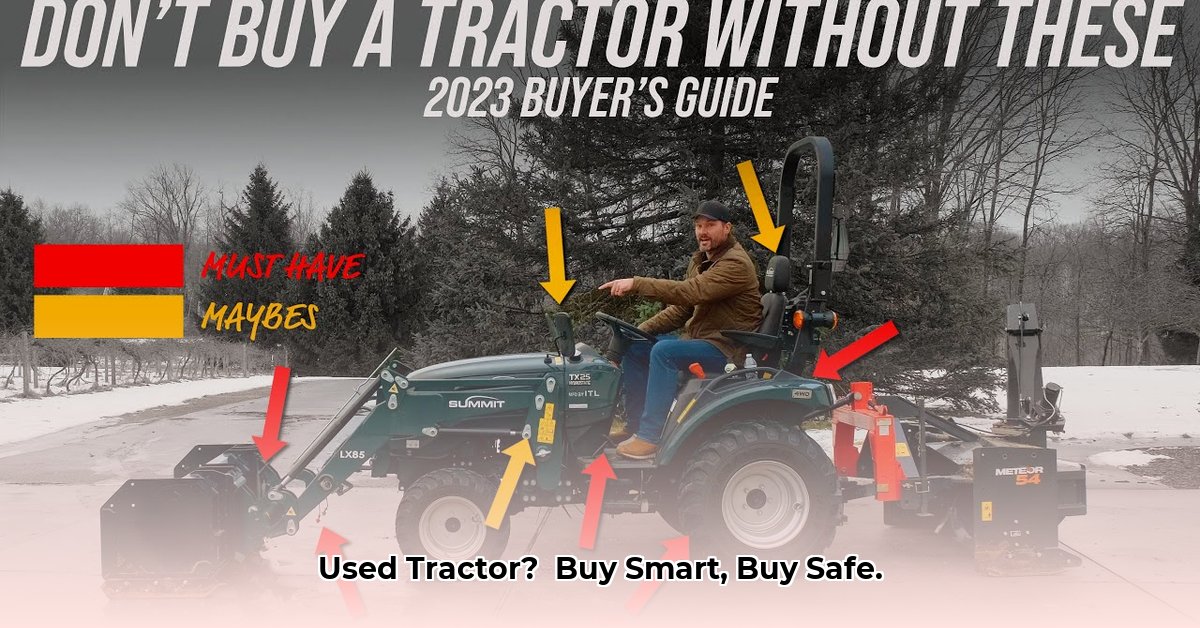
Buying a used tractor can be a smart financial move, but it requires careful planning and due diligence. This guide provides a step-by-step approach to help you navigate the process confidently and acquire a reliable machine without unexpected problems. Learn more about selling your old tractor here.
1. Defining Your Needs: What Will Your Tractor Do?
Before you start searching, identify your tractor's intended tasks. Will it primarily handle heavy plowing, light landscaping, or a combination of tasks? This directly impacts the required horsepower, size, and features. Consider the size of your property, the types of soil, and the frequency of use. A realistic budget is crucial; setting a firm price range prevents overspending. Think ahead: will your workload increase? Buying a tractor with future needs in mind can save you money in the long run. What are your specific needs? Do you need a front-end loader, three-point hitch, or PTO?
2. Researching Tractor Models: Choosing the Right Machine
Once you’ve defined your needs, research different models. Reputable brands known for reliability and longevity are a good starting point. Consider the age of the tractor; newer models might offer better technology and fewer issues, but they'll also cost more. Older tractors can be affordable but may need more frequent maintenance. Diesel engines generally offer more power and torque for heavier work, while gasoline engines are better suited for lighter applications. Research specific features essential for your tasks and compare specifications from several manufacturers. Online reviews from other users provide invaluable insights. Don't be afraid to seek advice from experienced tractor owners.
3. Locating Potential Tractors: Where to Find Your Next Tractor
Several avenues exist for finding used tractors. Dealerships offer certified pre-owned tractors with warranties and financing options, but at a higher price point. Auctions can offer significant savings but involve a higher risk, as tractors are typically sold "as is." Private sellers offer a more personalized experience but may require more thorough due diligence. Online marketplaces list used tractors but require careful vetting. A multi-faceted approach, combining online searches with in-person inspections at dealerships and private sellers, is often most effective.
4. Pre-Purchase Inspection: The Most Critical Step
A thorough pre-purchase inspection is paramount. This involves a meticulous examination to identify potential problems before committing to a purchase.
4.1 Visual Inspection
Begin with a careful walk-around. Look for signs of rust, dents, leaks, and any other visible damage to the body, tires, lights and any attached implements. Examine the paintwork for signs of poorly executed repairs, suggesting prior damage.
4.2 Mechanical Inspection
This requires a more detailed examination. Start the engine and listen for unusual noises. Check all fluid levels (engine oil, transmission fluid, hydraulic fluid). Run the engine for a sufficient duration, watching for vibrations or unusual sounds. Inspect all belts and hoses for cracks or wear. Test the brakes, transmission gears, and hydraulics. Assess steering responsiveness and the power take-off (PTO) operation. A smooth, responsive operation is desirable.
4.3 Functional Test Drive
A comprehensive test drive is essential. Operate the tractor in various conditions and terrains to gauge its performance. Test all controls and functionalities, paying close attention to steering response, gear shifting smoothness, and hydraulic efficiency. Observe braking performance at various speeds. Note any unusual behavior, sounds, or vibrations.
4.4 Review Maintenance Records
Obtain all available service records. Meticulous maintenance records indicate a responsible previous owner and can inform your future maintenance planning. Gaps in records might signify potential issues.
4.5 Professional Inspection
Consider engaging a qualified mechanic for a professional pre-purchase inspection, especially for higher-value tractors. This independent assessment adds an extra layer of security against finding costly problems after purchase. This is often a worthwhile investment.
5. Verifying History and Legalities: Ensuring a Clean Title
Before the purchase, verify the tractor's history and ownership. A title check confirms that the tractor isn't stolen and the seller has the legal right to sell it. Understand the legal implications of the purchase, depending on the seller (private party, dealership, auction). Proper documentation is vital to avoid future issues.
6. Negotiating the Price: Achieving a Fair Deal
Research comparable tractors to determine a fair market value. Consider the tractor's condition, age, hours of operation, and any included attachments. Use this information to formulate a reasonable offer. Negotiate respectfully but firmly. Remember, buying a used tractor is a significant purchase.
7. Securing Insurance: Protecting Your Investment
Insuring your tractor protects against theft, damage, and liability. Choose a policy that aligns with your usage and the tractor's value. This is a critical aspect of responsible ownership.
8. Post-Purchase Steps: Long-Term Care and Maintenance
After purchasing your tractor, register it properly. Develop a preventative maintenance schedule to ensure its longevity. Regular maintenance extends the lifespan and prevents costly repairs down the line. Consult the owner's manual for specific maintenance recommendations.
Three Pivotal Points for Buying a Used Tractor:
- A thorough pre-purchase inspection is essential to avoid costly repairs.
- Researching comparable models and understanding market value is key to negotiating a fair price.
- Properly verifying the tractor's history and legal ownership protects against future complications.
This comprehensive guide provides a structured approach to buying a used tractor safely and effectively. Remember, thoroughness and patience are key to a successful purchase.